
HERBAL INFUSED VINEGARS
Bottling the Garden
As the days begin to shorten and I see the herbs in my garden slowing down, I start thinking about all the ways I can carry a little of that fresh garden magic with me into the winter months.
Some herbs will be dried, some tucked into the freezer, and plenty will find their way into whatever is cooking in the kitchen right now. But one of my favorite ways to capture those last fragrant handfuls of the season is in a bottle of vinegar.
Rosemary, thyme, basil, tarragon, chives—even a little garlic from the kitchen—can turn an everyday vinegar into something wonderful. A few weeks from now, those simple bottles will be ready to brighten winter soups and stews, splash into a pan sauce, whisk into a vinaigrette or wake up roasted vegetables.
It feels a little like bottling the garden.
And that makes flavored vinegars a perfect addition to the A-PAW-THECARY.
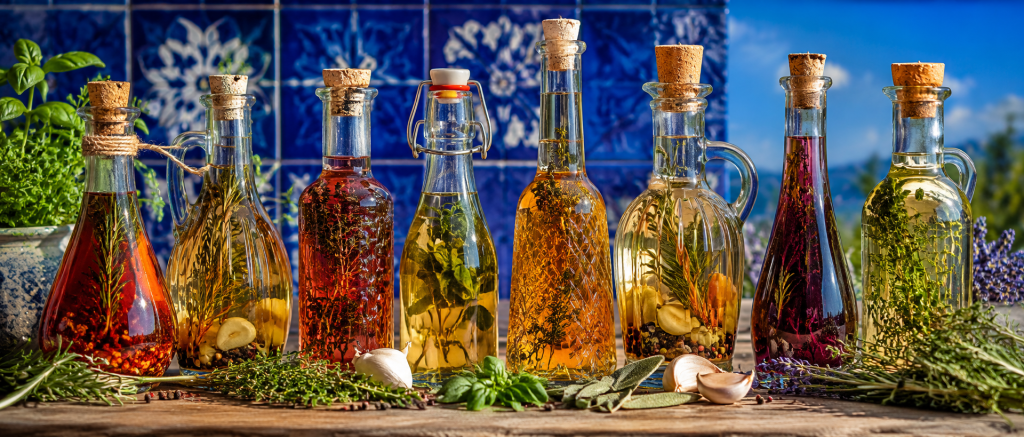
FIRST, CHOOSE YOUR VINEGAR
The vinegar is more than simply a way to preserve all that herbal flavor. Each variety brings a personality of its own.
Distilled White Vinegar
Clean, sharp and neutral. Its clear color is especially nice when you want delicate herbs, edible blossoms or colorful ingredients to remain the stars.
Apple Cider Vinegar
Mellower, fruity and amber-colored. Wonderful with rosemary, sage, thyme, berries and other autumn flavors.
White Wine Vinegar
One of my favorites for culinary herbs. It’s softer and more rounded than distilled vinegar and especially good with tarragon, basil, thyme, shallot and garlic.
Red Wine Vinegar
A natural partner for bigger Mediterranean flavors such as rosemary, oregano, garlic, peppercorns and chiles.
Rice Vinegar
Mild and slightly sweet, making it a lovely base for ginger, citrus peel, chiles and Asian-inspired combinations.
For homemade infusions, start with commercially produced vinegar rather than homemade vinegar. That way you know you’re beginning with a reliably acidic product.

LET’S MAKE A BOTTLE
The basic formula couldn’t be much simpler.
For approximately one pint of herbal vinegar, you’ll need:
- 2 cups commercially produced vinegar
- 3–4 sprigs of fresh herbs
OR - About 3 tablespoons dried herbs
You can also add small amounts of garlic, peppercorns, citrus peel, chiles and other aromatics.
Choose fresh, healthy herbs from the garden. Wash them well and pat them dry.
Use clean, sterilized glass jars or bottles with noncorrosive lids.
Heat the vinegar to about 190–195°F, just below boiling. Place your herbs and other flavorings in the prepared jar and pour the hot vinegar over them.
Seal the jar and place it somewhere cool and dark.
Then comes the hard part.
Wait.
You’ll begin getting flavor fairly quickly, but allowing the vinegar to infuse for about 3–4 weeks gives the herbs time to really work their magic.
Give it an occasional taste along the way. When you like the flavor, it’s ready.
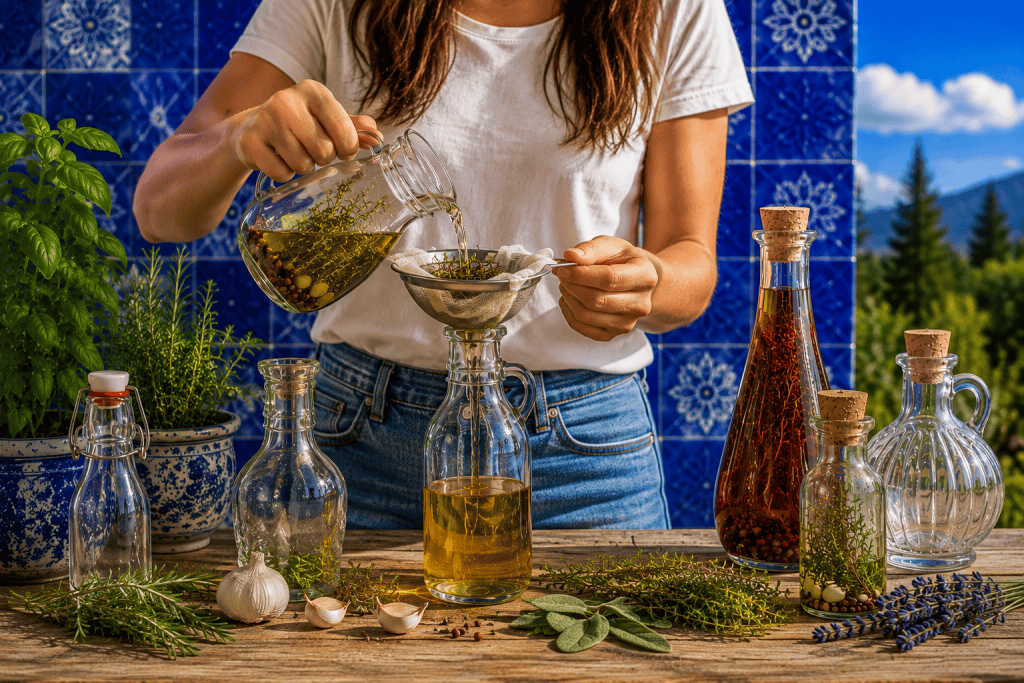
STRAIN OUT THE GARDEN
Once your vinegar has reached the flavor you want, strain out the herbs, garlic and other flavorings.
A damp piece of cheesecloth, jelly bag or coffee filter works well. You may need to strain the vinegar more than once if little particles remain.
Pour the finished vinegar into a clean, sterilized bottle and seal tightly.
As pretty as those herbs may look floating in the bottle, they’ve already done their job. Removing them keeps the vinegar clearer and helps prevent the flavor from becoming too strong or bitter.
If you’re giving a bottle as a gift and really want that beautiful sprig of rosemary inside, I would still make and strain the infusion first rather than leaving the original herbs soaking indefinitely.
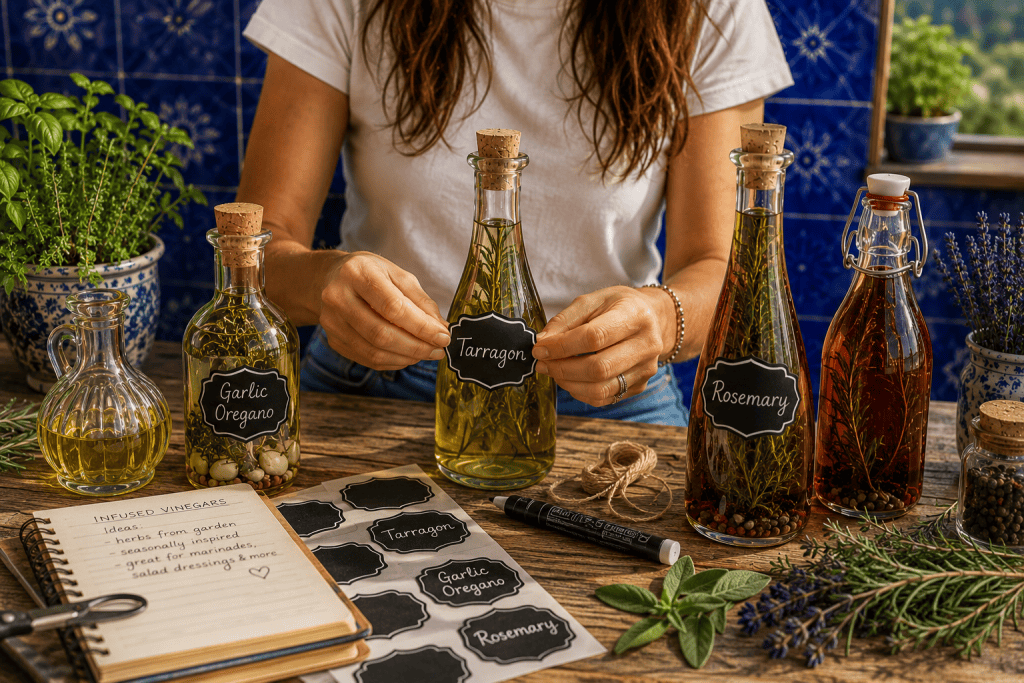
LABEL YOUR POTIONS!
This may seem unnecessary when there’s only one beautiful bottle sitting in front of you.
A few months later?
Was this rosemary and garlic? Or thyme and peppercorn? And when on earth did I make it?
Every bottle in the A-PAW-THECARY deserves a label.
At minimum, include:
ROSEMARY + GARLIC VINEGAR
White Wine Vinegar
Made: September 2026
I also love adding a little reminder:
USE WITH:
roast chicken • potatoes • beans • vinaigrettes
Labeling and dating aren’t just about making the bottles look charming lined up together. They’re important kitchen habits. Dating lets you keep track of freshness and makes it much easier to use the oldest bottles first.
Trust me—your future self will thank you.
WHERE SHOULD I KEEP IT?
Store your finished flavored vinegars tightly sealed and away from heat and sunlight.
For homemade flavored vinegars, I prefer the refrigerator. Refrigeration is a simple way to help maintain their fresh flavor and beautiful color.
And always use your senses.
If you ever see mold, unexpected bubbling, unusual cloudiness or sliminess, discard the entire bottle without tasting it.
That sunny kitchen windowsill may make a gorgeous photograph, but it isn’t the best home for your finished herbal vinegars.
Keep the pretty bottles cool and protected from light and they’ll return the favor.
A FEW A-PAW-THECARY POTIONS TO TRY
This is where you can start wandering around the garden and experimenting.
ROSEMARY + GARLIC
Try white or red wine vinegar.
Wonderful with roast chicken, potatoes, beans, grilled vegetables and pan sauces.
TARRAGON + CHIVE
White wine vinegar is lovely here.
Use it in vinaigrettes, chicken salad, potato salad, with fish or in creamy sauces.
BASIL + GARLIC + PEPPERCORN
A Mediterranean-inspired bottle that’s wonderful with fresh tomatoes, pasta salad, grilled vegetables and marinades.
THYME + LEMON
Add strips of the colored outer lemon peel, avoiding the bitter white pith.
Beautiful with chicken, fish, vegetables and salad greens.
DILL + LEMON + PEPPERCORN
Try this one with cucumbers, potatoes, salmon and creamy dressings.
ROSEMARY + ORANGE
Especially nice with apple cider vinegar.
Try it in autumn salads, pork marinades and with roasted squash or root vegetables.
GARLIC + CHILE
A bold little bottle for beans, marinades, grilled meats, greens and anywhere you want acidity with a bit of a kick.
SAGE + THYME + ROSEMARY
This one tastes like the autumn garden.
Use it with roast chicken, pork, stuffing, beans, mushrooms and hearty fall dishes.
And don’t be afraid to experiment with smaller bottles. That’s half the fun of having an A-PAW-THECARY.
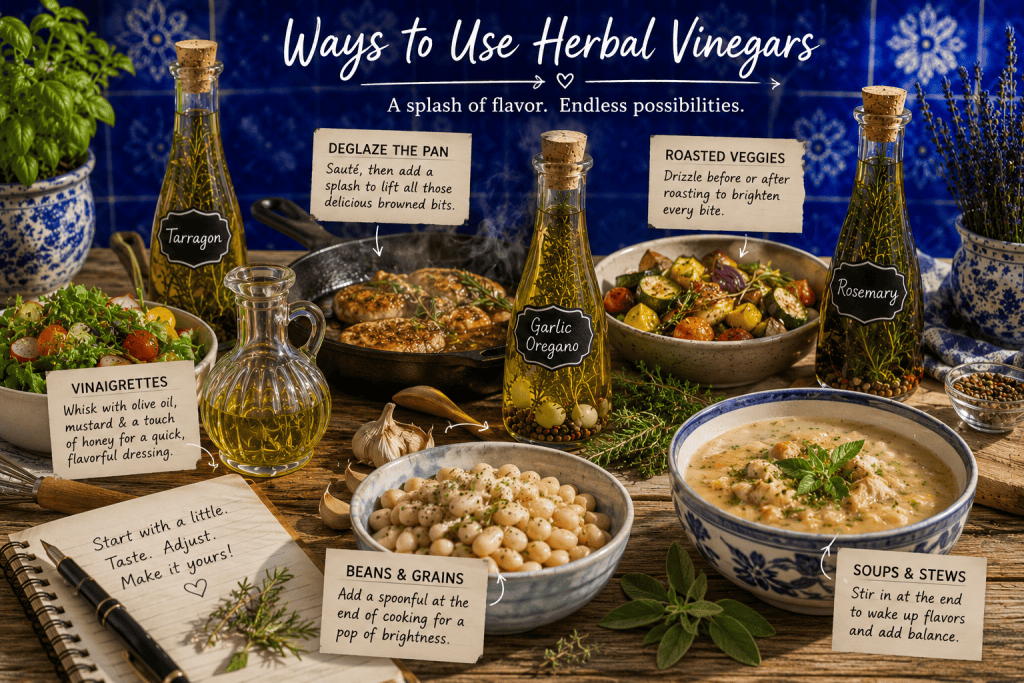
BUT WHAT DO I DO WITH IT?
Think of flavored vinegar as both acid and seasoning. Once you start thinking about it that way, you’ll find all sorts of places to use it.
• Splash a little into a hot pan after sautéing chicken or pork to loosen all those wonderful browned bits.
• Whisk it with olive oil, mustard and a little honey for an almost instant vinaigrette.
• Add a spoonful to a pot of beans or lentils just before serving.
• Splash some over cooked greens.
• Add a little to potato salad, egg salad or coleslaw.
• Brighten a soup or stew that tastes as though it’s almost there but still needs something.
• Use rosemary vinegar on roasted potatoes.
• Try tarragon vinegar in chicken salad.
• Add basil vinegar to fresh tomatoes with olive oil and sea salt.
• Mix a spoonful into mayonnaise for sandwiches.
• Use garlic and chile vinegar anywhere you might normally reach for hot sauce.
The wonderful thing about acidity is that a small amount often doesn’t make food taste particularly vinegary. Instead, suddenly everything else tastes a little more alive.
HERBS IN VINEGAR ARE NOT HERBS IN OIL
This one deserves an important little A-PAW-THECARY note.
Do not use these instructions to make herb- or garlic-infused oils.
Vinegar provides an acidic environment. Oil does not.
Garlic and fresh herbs stored in oil require completely different food-safety precautions because improperly prepared or stored infused oils can create conditions in which the bacteria responsible for botulism can grow.
So please don’t take your favorite rosemary-garlic vinegar recipe and simply swap the vinegar for olive oil.
We’ll save that lesson for another day in the A-PAW-THECARY.
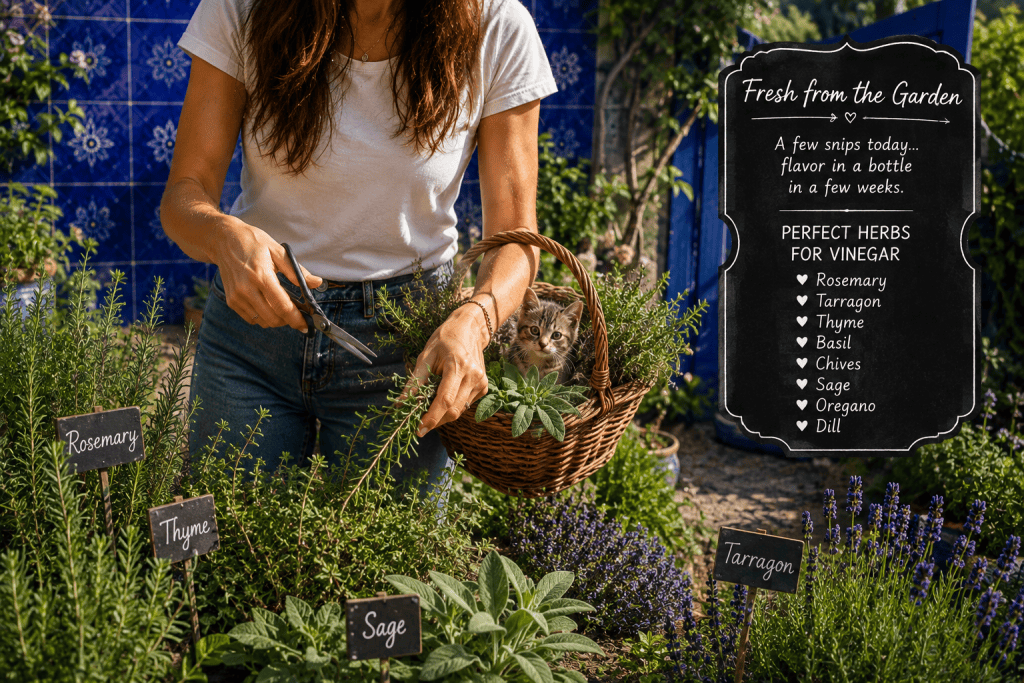
ONE LAST WALK THROUGH THE HERB GARDEN
One of the things I love most about making herbal vinegars is that I don’t need a huge harvest.
• A few sprigs of rosemary.
• A handful of basil.
• Some chives that need trimming.
• That thyme wandering over the edge of its pot.
• A little sage before the weather turns.
These are the odds and ends that can easily be forgotten as the garden begins winding down for the year. Instead, they get one more job.
Weeks from now, when the days are shorter and the garden has gone quiet, I can pull a little bottle from the refrigerator and splash rosemary and garlic into a winter stew or whisk tarragon and chive into a dressing.
And for just a moment, there it is again. A little fresh magic from the garden, bottled up and waiting in the A-PAW-THECARY.
A-PAW-THECARY QUICK NOTES
START WITH: Commercially produced vinegar
ADD: Fresh or dried herbs and your favorite aromatics
INFUSE: About 3–4 weeks in a cool, dark place
STRAIN: Remove herbs and other flavorings when the flavor is right
LABEL: What’s inside + vinegar used + date made
STORE: Tightly sealed; refrigeration is my preference
DISCARD: If you notice mold, bubbling, unusual cloudiness or sliminess
And most importantly…Don’t forget to use it! The whole point of bottling a little of the garden is to bring it back to the table.
